

How Much Do Inflatable Rental Businesses Really Earn on Weekends in Australia? (2026 Market Analysis)

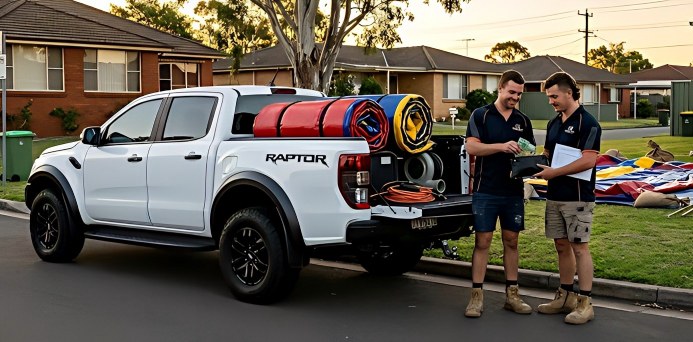
Let’s be honest: running a jumping castle business in Australia is a massive grind. You’re up at 6 AM loading the ute, fighting Sydney or Melbourne traffic, and spending your Sunday nights hosing down mud and grass from heavy-duty PVC.
But if you’ve been wondering why there are so many hire companies popping up across the suburbs, the answer is simple—the weekend cash flow is hard to beat. Here’s a realistic look at what the “pros” in the Australian market are actually banking in 2026.
The Rates: What’s the Market Paying?
In most Australian suburbs, parents are prepared to pay for quality. If you’ve got AS 3533.4.1 compliant gear that actually looks clean and safe, here is the current daily hire rate:
- Standard Backyard Bouncers: You’re looking at $250 – $350 for a day.
- The “Combo” (Jump & Slide): These are your bread and butter. Most operators are getting $400 – $550 a day.
- Water Slides: In a QLD or NSW summer? They are absolute goldmines from November to February, easily commanding $600+ per day.
A Typical Weekend Reality Check (5-Unit Fleet)
If you’ve got a small “starter” fleet—say 5 units—and you’ve done your marketing work on Google and social media, a busy weekend with an 80% occupancy rate looks like this:
| The Gear | Weekend Revenue (2 Days) | Total Gross |
|---|---|---|
| 2x Standard Castles | $550 per unit | $1,100 |
| 2x Medium Combos | $850 per unit | $1,700 |
| 1x Big Water Slide | $950 | $950 |
| Gross Total | $3,750 |
Wait, that’s not all profit. Before you go buying a new Raptor, remember the “hidden” stings that come with running a business across Australia:
- Insurance: Public liability is non-negotiable (budget at least $400/month for a small fleet).
- Casual Staff: If you’re paying a couple of students $35/hr to help you lift and set up, that eats into the margin.
- Fuel & Maintenance: Diesel isn’t cheap, and those KMs on the ute add up fast during the peak season.
Even after expenses, efficient operators are walking away with 40% to 55% in their pocket. That’s a $1,500 – $2,000 net profit for a single weekend of hard work.
The ROI – How Fast Do You Recoup Your Investment?
This is the most attractive part. A high-quality, commercial-grade combo unit costs you between $3,500 and $4,500 if you source it directly from a specialized factory. At a hire rate of $400+ per day, the asset pays for itself in roughly 10 to 12 bookings. In a busy Australian summer, a single unit can be fully “paid off” and earning pure profit within its first three months.
3 Things the “Newbies” Always Forget
- The Wind is Your Enemy: In Sydney, those afternoon “Southerly Busters” are no joke. If you aren’t using heavy-duty pegs and checking the BOM (Bureau of Meteorology) every hour, you’re asking for trouble.
- Compliance is Key: Councils and public parks are getting strict. If you don’t have your design registration and annual inspection tags sorted, you’ll be kicked out of the local fete faster than you can say “Jumping Castle.”
- Material Matters: If you buy cheap “retail” inflatables, they won’t last one season in the Australian sun. Professional operators stick to 0.55mm (18oz) PVC to ensure the gear lasts for years of heavy use.
The Verdict
Is it easy money? No. It’s heavy lifting and long hours. Is it good money? Absolutely. If you buy the right commercial-grade gear and treat it like a real business, the ROI in the Australian market remains one of the highest in the event hire industry.