Can you actually make money with inflatables in Australia?

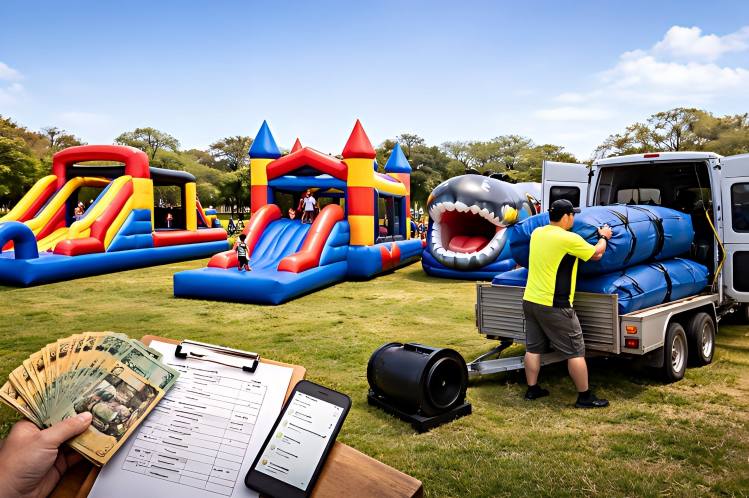
Starting an inflatable rental business in Australia is often seen as a low-cost way to enter the events industry. But many people still ask a practical question: can it really generate consistent income, or is it just a side hustle with limited returns?
The answer is yes, it can be profitable. However, the outcome depends heavily on location, product choice, and how you approach bookings and marketing.
Demand for inflatable rentals in Australia
Australia has strong and stable demand for inflatable products such as jumping castles, inflatable slides, and obstacle courses. This demand is driven by several factors.
First, outdoor events are common across the country, especially in cities like Sydney, Brisbane, and Perth. Second, children’s birthday parties are a consistent source of bookings every weekend. Third, schools, councils, and community events frequently hire inflatables for larger gatherings.
Because of this, weekends are the main revenue period. Many operators report that Saturdays and Sundays are fully booked during peak months.
Typical rental prices and income potential
Rental pricing varies depending on the type and size of the inflatable.
- Small jumping castles usually rent for around AU$150 to AU$250 per day
- Combo units with slides can range from AU$250 to AU$400
- Larger inflatables such as obstacle courses or big slides can reach AU$400 to AU$800 or more
A simple example helps illustrate the earning potential.
If you operate two inflatables and secure four bookings over a weekend at an average of AU$250 per booking, that results in AU$1,000 per weekend. Over four weekends, that becomes approximately AU$4,000 per month in revenue.
As operators expand to three or more units, it is common to see weekend revenue increase to AU$2,000–AU$4,000, especially during warmer seasons.
Startup costs and investment
One reason this business attracts beginners is the relatively low startup cost compared to other industries.
A basic setup usually includes:
- Two commercial-grade inflatables: approximately AU$2,000 to AU$5,000
- Blowers and anchoring equipment: often included
- Insurance: typically AU$300 to AU$800 per year
- Transport (trailer or van): optional in the early stage
In most cases, a small operation can start with an investment of around AU$3,000 to AU$6,000.
Operating costs and margins
Ongoing costs are relatively low. The main expenses include fuel, minor repairs, and basic marketing such as Facebook ads or a simple website.
Because inflatables are reusable assets, the margin per booking can be high once the initial investment is recovered. This is one of the main reasons the business model is attractive.
Return on investment timeline
A key advantage of inflatable rentals is the potential for a fast return on investment.
If a small operator generates around AU$1,000 per weekend and works consistently, monthly revenue can reach AU$4,000. Even after deducting expenses, many operators recover their initial investment within two to three months.
However, this depends on achieving consistent bookings. Without demand, the timeline can extend significantly.
Common mistakes that reduce profitability
While the business can be profitable, not all operators succeed. The most common issues include:
- Choosing low-demand areas with limited customer volume
- Purchasing products that do not attract bookings
- Lack of online presence or poor response to enquiries
- No repeat customer strategy
In many cases, the problem is not the product itself, but how the business is managed.
What successful operators do differently
Operators who generate stable income usually follow a few consistent practices.
They focus on popular, proven designs rather than overly complex units. They respond quickly to customer enquiries and maintain clear communication. They also invest in good photos and listings, as most customers make decisions based on online presentation.
In addition, many build relationships with schools and local event organizers, which leads to repeat bookings and more predictable income.
Is the market still viable in 2026
The inflatable rental market in Australia is more competitive than before, but it is still growing. Demand remains strong due to ongoing interest in outdoor entertainment and family events.
The key difference today is that simply owning an inflatable is no longer enough. Operators need to think in terms of business structure, customer acquisition, and local visibility.
Conclusion
It is possible to make money with inflatables in Australia, and many small operators are already doing so. The business offers low startup costs, relatively fast returns, and the ability to scale over time.
However, profitability is not automatic. Success depends on choosing the right products, targeting the right customers, and maintaining consistent bookings.
For those willing to treat it as a structured business rather than a casual side project, inflatable rentals can still be a reliable source of income in 2026.